Published 20 September 2026 · Updated 15 October 2026
Choosing a car parking shade fabric involves more than comparing the names HDPE, PVC and PVDF. Two fabrics sold under the same broad description can have different constructions, nominal weights, fire-test documentation and warranty conditions. The useful question is which named product suits the coverage required at your site, and how its documentation connects with the proposed shade structure.
Umbrella Tent & Shades uses GALE HDPE fabrics and offers coated membrane options for parking shade work in Saudi Arabia. This guide explains the supplied documentation for Commercial 95, Commercial Heavy 430 and Commercial NinetyFive 340 FR, together with the PVC and PVDF-finished sheets provided for review. It also shows what customers should confirm before accepting a quotation.
Start with the job the covering must perform
Before selecting a fabric, describe what needs covering. An open row of staff parking, an entrance where rain coverage matters and a courtyard with a consultant-issued specification may lead to different choices. The number of vehicles is helpful, but it does not explain the parking arrangement, support positions, roof geometry or drainage requirements. A simple marked layout often answers more questions than a material name alone.
Decide whether the priority is solar shade, a particular architectural appearance, rain coverage or a documented fire-performance requirement. Then identify the proposed product rather than assuming that every fabric in a category does the same job. Keep the steel, attachments and covering in the same design discussion. Fabric data should inform the structure; it should not be used as a substitute for structural engineering.
What HDPE means in a parking shade
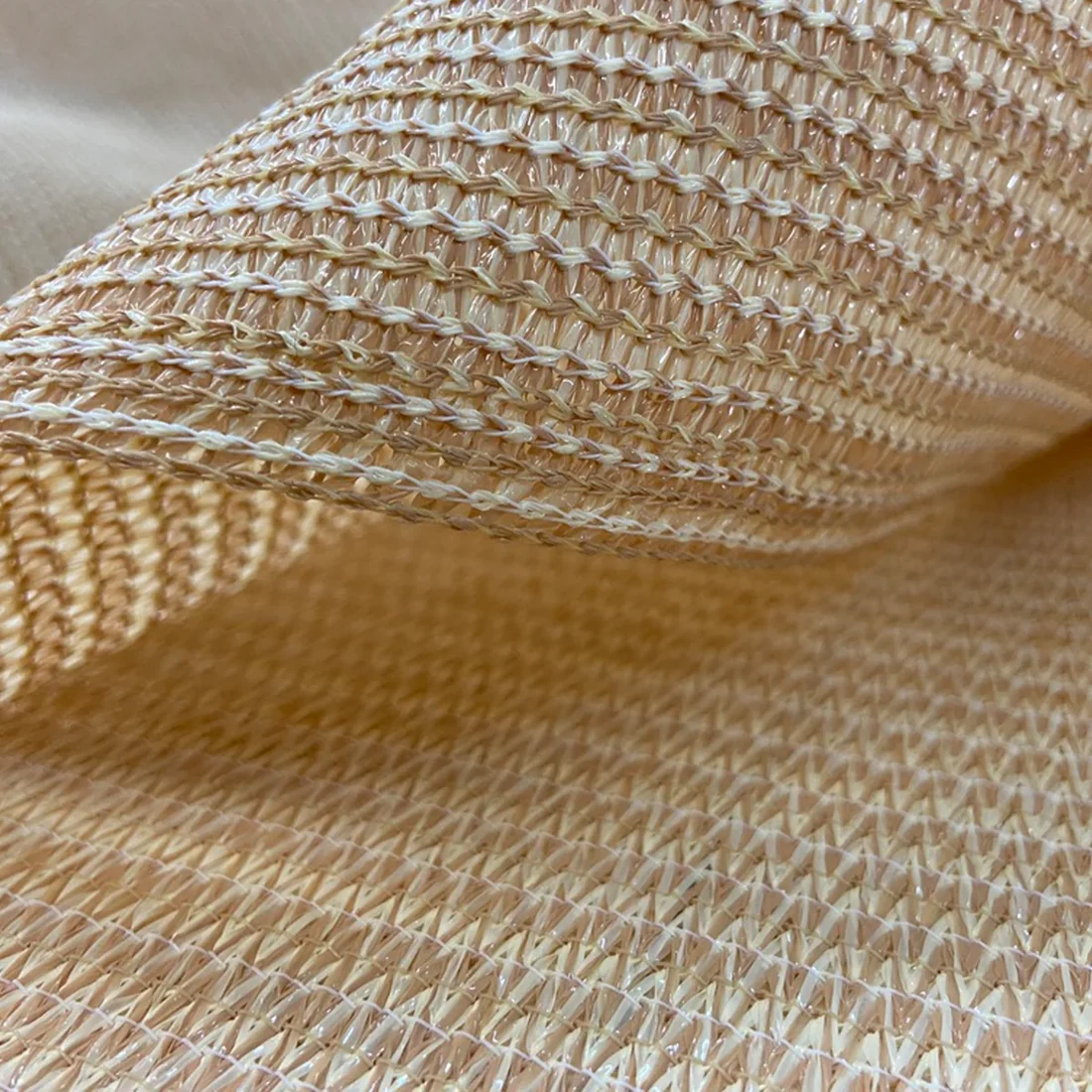
HDPE means high-density polyethylene. The GALE products discussed here are knitted shade fabrics. Their construction differs from a continuous coated membrane: yarn arrangement, openings and tension influence how the installed covering behaves. Standard knitted HDPE should not be described as a completely waterproof roof. If rain exclusion is an essential requirement, explain that at the inquiry stage so the full covering and drainage arrangement can be reviewed.
For parking areas, buyers often consider HDPE when the brief calls for an open shade covering. The decision still needs the named fabric, colour and manufacturer information. Weight is one product characteristic, not a complete quality ranking. Comparing a 340 gsm product with a 430 gsm product solely by the larger number overlooks construction, mechanical behaviour and suitability for the selected system.
GALE Commercial 95: the standard 340 gsm option
The supplied Commercial 95 documentation identifies knitted UV-stabilised HDPE made with monofilament and tape yarns. It lists a nominal fabric mass of 340 gsm, with a stated tolerance of ±20 gsm. “Gsm” means grams per square metre of fabric; it is a material mass measurement, not the weight of the complete parking shade and not a steel specification.
The supplied brochure includes a 10-year warranty against UV degradation of the fabric. That description matters: it should not become a promise that the entire installed canopy is covered against every cause of damage for ten years. Ask for the applicable written manufacturer warranty, the product identification and the conditions that will accompany the quotation. Keep fabric warranty coverage distinct from workmanship and structural responsibilities.
The brochure also presents colour-specific shading and UV information. Those values should stay connected to the named colour and stated test method. A figure shown for one colour must not be applied to every colour, and UV block should not be confused with shade factor or visible-light transmission. Where a consultant requires a particular value, request the current product evidence for the proposed colour.
GALE Commercial Heavy 430: a separate HDPE grade

Commercial Heavy 430 is another knitted HDPE product, not simply a heavier version that can be substituted without review. The supplied Rev.3 product profile, dated August 2019, lists a nominal fabric mass of 430 gsm ±20 and a 15-year UV-degradation warranty on the fabric. These are product-specific statements. They do not establish a fifteen-year warranty for every HDPE covering supplied under the GALE name.
The profile contains mechanical test results that differ from those of Commercial 95 and the FR grade. A designer should use the information relevant to the exact product and proposed arrangement. Customers should not convert a fabric force value into a wind-speed rating for a completed canopy. The structure, geometry, connections and project design criteria all belong in that engineering assessment.
Commercial Heavy 430 can therefore be included as a named option when reviewing your parking shade requirement. The quotation should identify it explicitly if it is selected. A general description such as “heavy-duty HDPE” leaves room for uncertainty about the supplied grade, its documentation and the warranty being passed through to the customer.
Fire-rated HDPE: GALE Commercial NinetyFive 340 FR

The supplied Commercial NinetyFive 340 FR profile describes a flame-retardant knitted shade fabric for architectural covering applications. It lists a nominal mass of 340 gsm ±20 and states certification to California State Fire Marshal CSFM 1237.1 and compliance with NFPA 701 across its colour variants. These statements describe the supplied product profile; the current certificates for the selected product should be obtained when the project requires them.
Fire-rated and flame-retardant wording must remain precise. It does not mean that a fabric is fireproof, that an entire parking shade has a fire-resistance rating, or that the material automatically satisfies every Saudi approval requirement. The supplied sheet itself instructs users not to use the product against flames. A fire-test designation is evidence for a particular material and test, not permission to expose the covering to direct flame.
For this 340 FR product, the supplied Rev.1 profile dated March 2020 states a full 10-year UV-degradation warranty on the fabric. Umbrella Tent & Shades has confirmed that ten years is the period to describe for this FR option. The fifteen-year period in the supplied documents belongs to Commercial Heavy 430. Keeping these grades separate prevents an appealing warranty number from being attached to the wrong material.
PVC-coated polyester: read the base fabric and coating together
PVC parking shade membranes typically combine a textile base with a PVC coating. In the supplied Panama Tex sheet, the base fabric is identified as PES, meaning polyester, and the coating is listed as PVC. The sheet records a total weight of 1,100 g/m² ±5% and describes the material as weldable. These are details for that sheet, not a standard specification for all PVC membranes.
A coated covering may be considered where the design calls for a continuous membrane and greater rain coverage, but the roof must still address seams, edges, falls and discharge routes. A coated fabric does not make a poorly resolved canopy waterproof by itself. Tell the contractor where runoff can go, especially near doors, pedestrian paths and adjacent property. Confirm the complete system rather than accepting a broad “waterproof material” description.
The Panama sheet does not print a warranty duration. It says that terms and conditions apply according to company policy. Umbrella Tent & Shades has confirmed that the PVC option it supplies is offered with a ten-year manufacturer warranty passed on to the customer, subject to the applicable written terms. Request those terms with the quotation; this article does not extend their scope or exclusions.
PVDF is a finish, not the whole membrane specification
PVDF means polyvinylidene fluoride. In shade membrane discussions, it commonly refers to a surface finish used on a compatible coated textile. The supplied Naizil Plus Cover Type 3 preliminary sheet identifies PVC as the coating and PVDF lacquer on the top side. That is why “PVC” and “PVDF” should not always be treated as two unrelated base fabrics in a comparison.
The useful description identifies the membrane manufacturer, product grade, base construction, coating and finish. Ask which side carries the stated finish and what the supplier’s fabrication and care instructions require. A surface-finish label alone does not confirm rain performance, a cleaning interval, fire classification or structural suitability. Those questions need the relevant product evidence and the roof design.
The supplied Naizil sheet is dated 30 April 2017 and marked preliminary. Its warranty row says twelve years, but it does not explain the full warranty coverage. That row should not be replaced with a generic ten-year or fifteen-year claim. Where this exact product is proposed, confirm its current availability, final technical sheet and written warranty before treating the preliminary document as the purchase specification.
Compare the supplied grades without mixing their promises
| Named product | Construction or finish | Nominal mass in supplied sheet | Warranty information |
|---|---|---|---|
| GALE Commercial 95 | Knitted HDPE | 340 gsm ±20 | 10-year fabric UV-degradation warranty |
| GALE Commercial Heavy 430 | Knitted HDPE | 430 gsm ±20 | 15-year fabric UV-degradation warranty |
| GALE Commercial NinetyFive 340 FR | Flame-retardant knitted HDPE | 340 gsm ±20 | 10-year fabric UV-degradation warranty |
| Panama Tex PVC sheet | Polyester base with PVC coating | 1,100 g/m² ±5% | 10 years confirmed by Umbrella; obtain written manufacturer terms |
| Naizil Plus Cover Type 3 | PVC coating with top-side PVDF lacquer | 1,100 g/m² | 12 years shown in preliminary sheet; current coverage requires confirmation |
This table helps identify products; it does not rank them from weakest to strongest. Manufacturer sheets use particular methods, directions and units for testing. Values should not be compared casually across unlike test methods, nor treated as guaranteed minimums when the sheet describes them as typical averages.
Why fabric test data is not a canopy wind rating
A material profile may list tensile force, elongation, tear resistance or bursting results. Those tests describe aspects of the fabric under stated conditions. They do not tell you which steel sections, foundations or anchors a parking shade requires. They also do not establish a universal clearance, span or wind rating for a structure installed at a different site.
For a cantilever parking shade, the roof projection, support positions and attachment arrangement must be considered with the selected covering. For an existing installation, ask for a frame and connection review before switching materials. A new fabric may change the design discussion even when it appears to cover the same area.
Site conditions in Saudi Arabia belong in the inquiry
State the project city and describe the actual surroundings. A site in Dammam or Khobar should identify coastal exposure where relevant, while a Riyadh inquiry should still explain nearby operations, access and the parking layout. City names alone cannot settle the fabric or steel finish.
Describe dust accumulation, cleaning access, any nearby processes and whether the owner has issued a written specification. Keep the protective finish on the steel separate from the fabric selection. Our coastal planning guide explains how exposure, drainage and maintenance access connect without prescribing one finish for every site.
Compare quotations on the same documented scope
Ask each proposal to name the fabric product and colour, identify its supporting documents and state the warranty offered. Then compare the covered layout, steel finish, attachment details, engineering responsibility and installation scope. A lower price may reflect a different grade or an excluded responsibility; a higher price does not prove a more suitable material.
Confirm who provides design approvals, civil work information and any required site checks. Clarify drainage responsibilities for coated membranes and access arrangements for cleaning or later replacement. The installation and handover guide helps structure those questions. Keep accepted revisions with the final quotation so a later change does not leave the covering described only by a category name.
Warranty period, coverage and service life are different
A ten-year or fifteen-year warranty is not the same as a promised service life. The written warranty may identify a particular deterioration mechanism, conditions of use, claim procedure and remedy. Do not assume it includes removal, replacement labour, the supporting frame or damage from every weather event. Those items need to be stated in the actual documents and contract.
Umbrella Tent & Shades passes applicable manufacturer fabric warranty coverage to the customer according to the agreed supply. Keep proof of product identity and purchase, the applicable warranty and relevant installation records. If a claim becomes necessary, those records help identify the correct product and conditions. Request clarification before ordering rather than relying on a headline warranty period.
Care and replacement should follow the selected product
Use the manufacturer’s care instructions for the supplied fabric and avoid assuming that a cleaning method suitable for one membrane suits every covering. The supplied GALE profiles warn that contact with certain solvents, halogens or highly acidic substances may reduce service life and affect warranty eligibility. Cleaning and maintenance decisions should therefore be connected with the actual product documentation.
If the covering is worn or damaged, assess the fabric, attachments and supporting frame together. A visible problem in the cloth does not establish that the frame is ready for a direct replacement. Our fabric replacement and repair guide explains the initial checks. Photographs can help define the inquiry, but final measurements and installation decisions may require a site review.
Shade fabric gallery
Sample photographs supplied by the company, with names as identified by the company. A photograph alone does not verify fabric weight, fire classification or coating. The named product and its documentation are reviewed with the quotation.
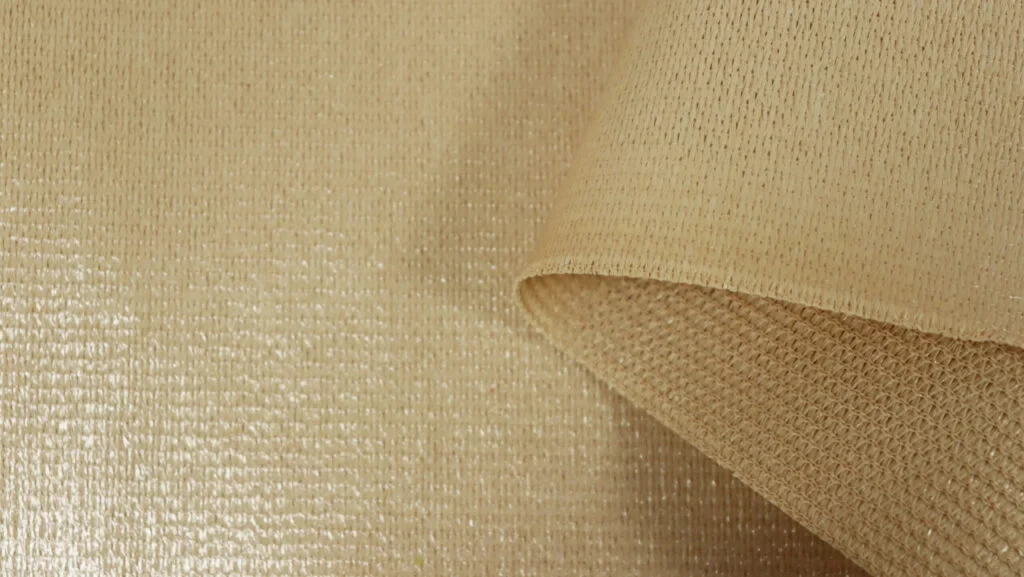

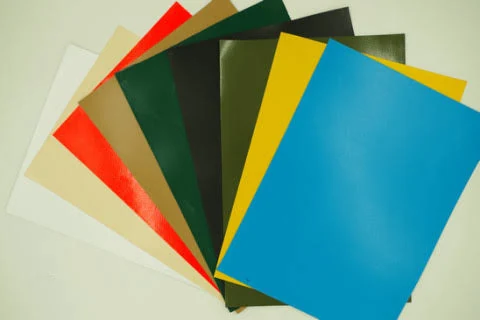
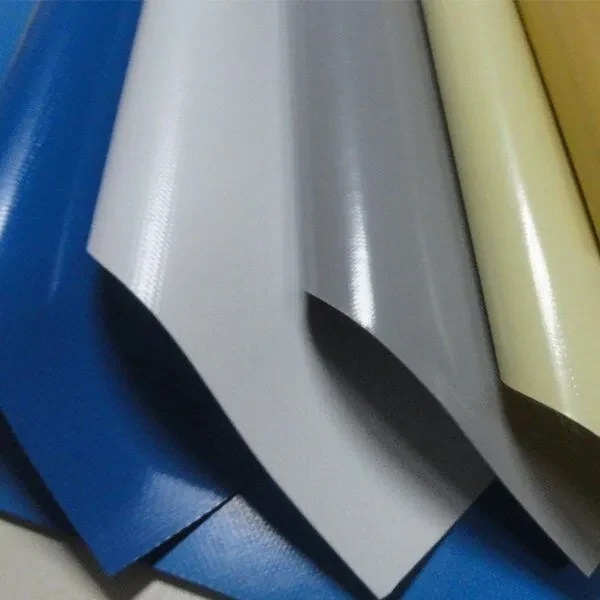
The sample identified as waterproof HDPE refers to a specific coated option; ordinary knitted HDPE is not thereby waterproof. Confirm the product, water-permeability data and drainage details before agreeing rain-cover requirements.
Frequently asked questions
Is 430 gsm HDPE automatically better than 340 gsm?
No. They are different named grades. Choose according to the product data and proposed structure, not fabric mass alone.
Does all GALE HDPE have a fifteen-year warranty?
No. The supplied Commercial Heavy 430 profile states fifteen years against UV degradation. The Commercial 95 and supplied 340 FR documents state ten years.
Is fire-rated HDPE waterproof or fireproof?
Neither description follows from the fire-test designation. Confirm rain coverage separately, and do not expose the covering to direct flames.
Does PVDF replace PVC in the supplied Naizil membrane?
No. That preliminary sheet identifies a PVC coating and a PVDF lacquer finish on the top side.
Can I request a quotation before choosing a fabric?
Yes. Describe the location and coverage needed. The material and any required supporting evidence can be reviewed during scope development.
Request a material-specific parking shade quotation
For car parking shades across Saudi Arabia, tell Umbrella Tent & Shades your project city and what needs covering. If you have a layout, drawing, photograph, dimensions or parking-bay count, send it with your inquiry. We’ll review the details and confirm what is needed for a quotation. These extra documents and measurements are helpful when available, not mandatory form fields.
Use our quotation form or email info@umbrellatentshades.com. When file upload is unavailable, send drawings and photographs by email with your name and location. We aim to respond within 24 hours. Our team can then identify the proposed fabric, relevant specification and applicable manufacturer warranty clearly in the quotation. For a quick response, message us on WhatsApp.